

/ The Expressway is the best way
/ What homeowners say about us
Most calls start the same way: a leak after a heavy rain, crumbling mortar, or a fireplace you’re not sure is safe to use. Here’s what Long Island homeowners told us once the work was done.
The chimney is one of the most overlooked structures of a dwelling. The fact that chimneys can do their job effectively, even when overlooked, contributes to this theory that ‘it’s probably fine’. A chimney deteriorated by constant exposure to the weather will be a potential safety hazard. Weather-damaged lining systems, flue obstructions and compromised masonry bricks all present a hazard to properties.
The complication is that hundreds of masonry chimneys were not designed to handle the venting requirements of modern high-efficiency heating appliances burning natural gas & oil.
Masonry materials deteriorate quickly when exposed to the extreme freeze/thaw processes of Nassau County, in which moisture that has penetrated the materials periodically freezes & expands causing undue stress.
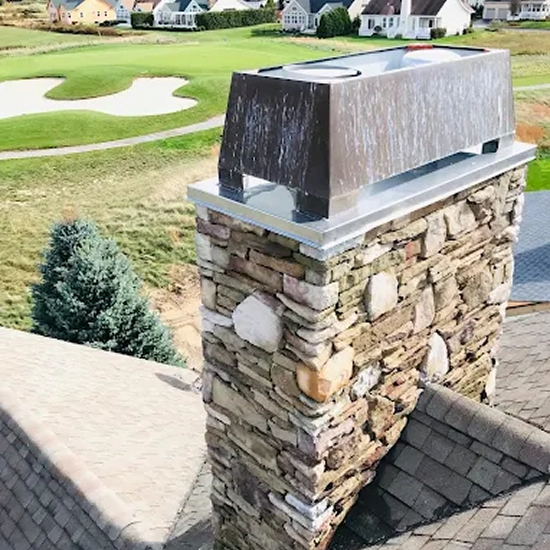
While most stone is not affected by water penetration, large amounts of mortar are required to bond the stone correctly.
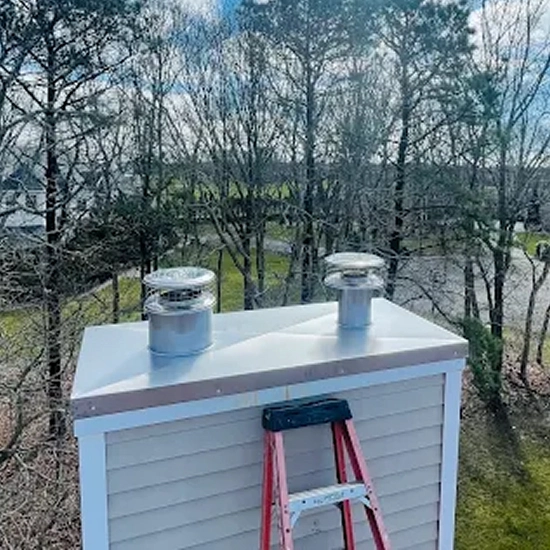
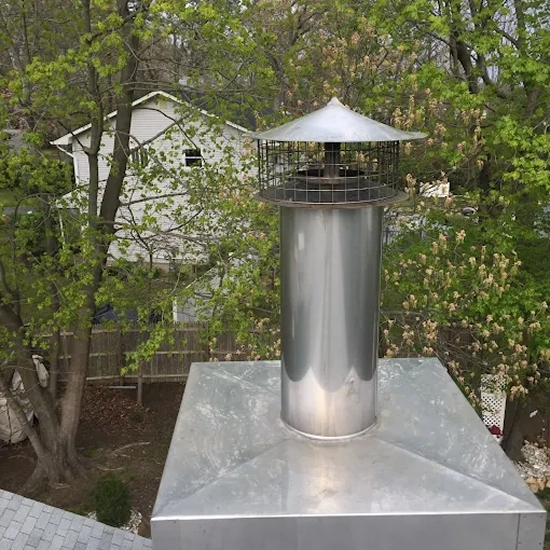
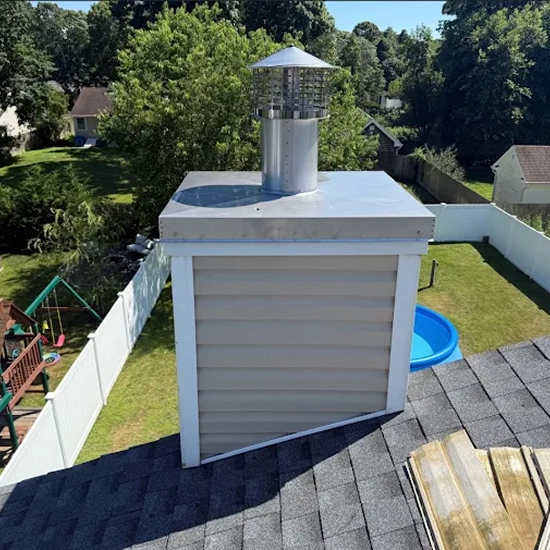
Chimney caps have long been recognized as an important chimney safety & deterioration-prevention element.
Defective mortar joints or the use of imperfect mortar or brick might greatly increase the tendency to absorb & pass water to the interior of the masonry chimney.
Our masons will advise a resident in your own personal situation what is best for you.
For a metal, brick or fabricated chimney repair evaluation call or text Expressway at 631.388.7555.
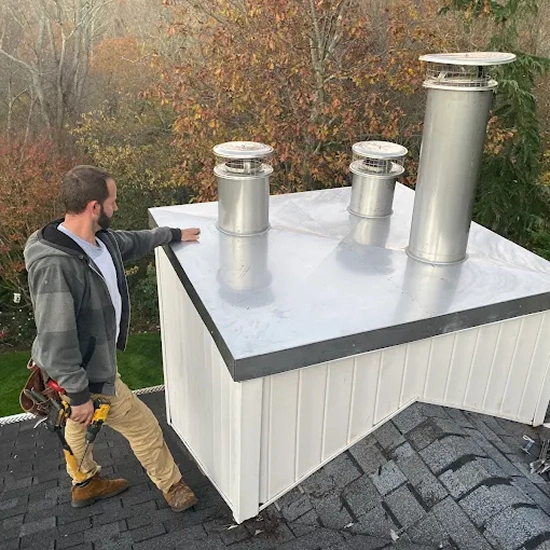
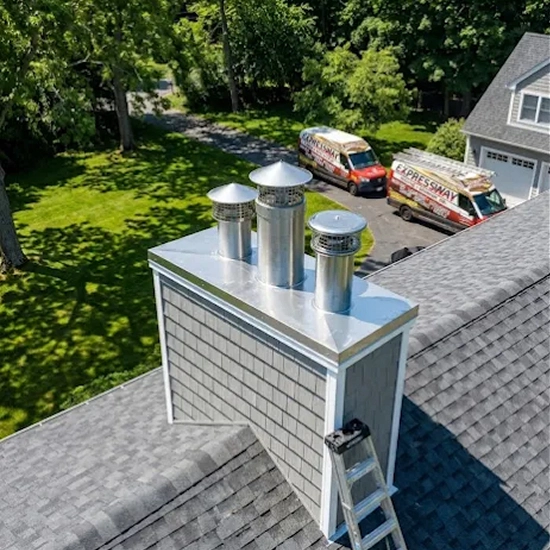
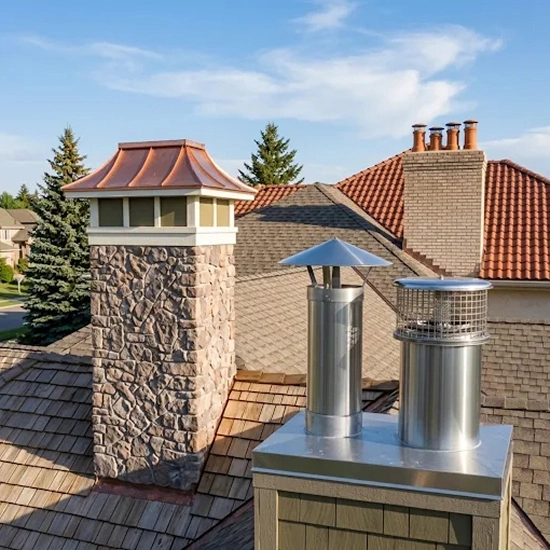
One of the least expensive parts of the chimney venting system is the one that can prevent some of the most costly issues. If you don’t have a chimney cap on your chimney, stop reading right now and call our trusted team for an estimate now! Every chimney pro knows that a safe chimney cap is a must.
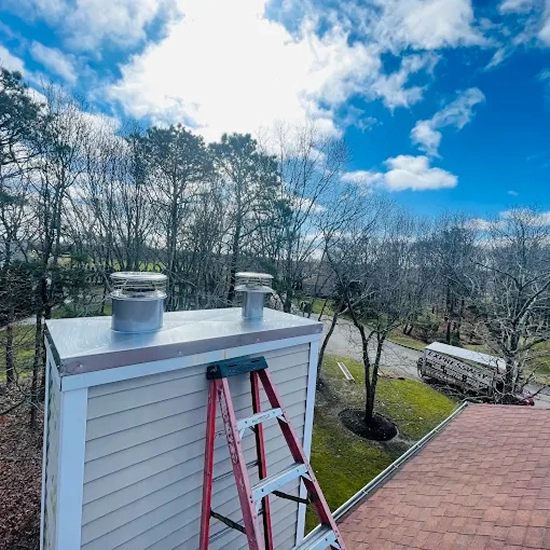
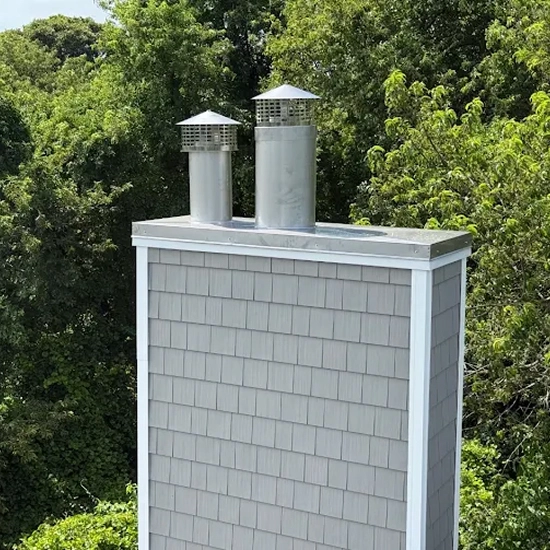
Most chimney caps are made from copper or stainless steel
In especially windy areas chimneys also might prevent downdrafts by blocking crosswinds from entering the chimney.
Our chimney craftsmen could recommend the best solution for your chimney.
This is the perfect upgrade for fireplace chimneys in older houses that hardly ever have a damper.
It is hard to believe how persistent animals and birds can be over the summer crafting a wonderfully cozy nest right inside your chimney.
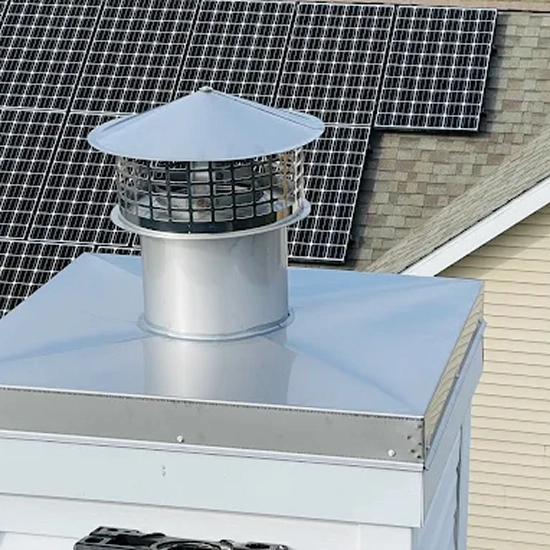
Metal fireboxes, liners & dampers all could suffer rust and deterioration. Chimney liner tiles & mortar will crumble and crack, leading to critical issues. The chimney cap cover deflects rain & the side mesh prevents pests & leaves from entering. A properly fitted chimney cap or guard may slow wear-and-tear on your chimney and lining, saving you from costly expenses.
Our technicians can come out & recommend the best option for you & provide a written estimate to install a new chimney cap, damper, or guard.
Water starts more damage than any other element. It soaks into porous bricks & wears away the mortar. It’s a common issue: raccoons, squirrels, birds & bats try to make their house in your chimney.
Chimneys can block proper ventilation & even allow pests to enter your house, potentially spreading disease & causing havoc. Our strong mesh and lids can keep even the most determined animals out!
Your fireplace may send sparks onto the roof or nearby flammable products. Stray sparks may be stopped by the mesh cover that is a part of all our chimney caps.

Local Chimney Repair & Replacement Contractors
The method recommended for your chimney will depend on the type of deposits. The Thermocrete process coats the inside of the chimney with a durable ceramic sealant. Thermocrete has UL Listing and is approved for gas & oil.
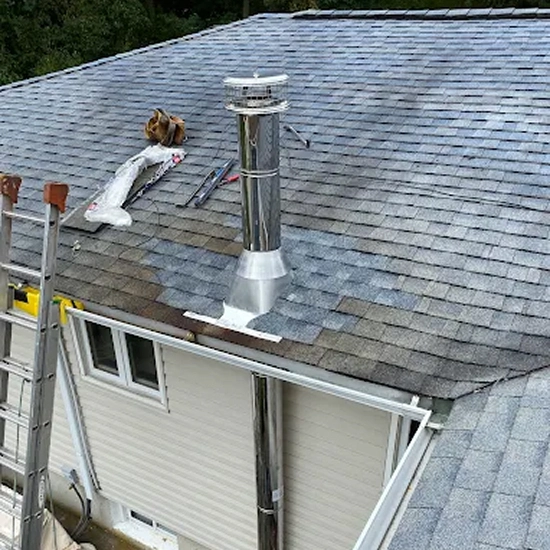
It conforms to any chimney size and shape, becoming a corrosion-proof, flame- and heat-resistant, airtight system with steel-like rigidity. A stainless steel chimney liner is air- & water-tight.
Stainless steel liners are UL tested under extreme conditions, including simulated chimney fires over 2100°F, so you’ll sleep soundly knowing your house is safer.
The liner protects your house from heat transfer to nearby combustibles. NBS tests showed that unlined chimneys let heat move so quickly that adjacent woodwork caught fire within 3½ hours.
Flue gases are acidic and eat away at mortar joints from the inside. Liners also provide a correctly-sized flue for efficient appliance performance.
Modern stoves and furnaces need a properly-sized flue to operate efficiently. Our main role is to remove flue deposits & evaluate the overall chimney system.
Our objective is to provide recommendations that might improve the safety & efficiency of your appliance & venting system.
Chimneys should be cleaned when soot and creosote accumulations approach or exceed 1/4 inch. Glaze build-up in excess of 1/8 inch can be removed. Our technicians employ multiple cleaning systems to remove chimney deposits. Frequent (at least annual) chimney consultations are the only way to know when the chimney is in need of repairs.
Expressway: Your Local Nassau County Chimney Maintenance Experts
Several of the common chimney cleaning methods we provide include:
Standard Sweep. This is the standard cleaning method & uses brushes to clean the flue. A powerful, well-filtered vacuum prevents soot and creosote from entering the residence. This cleaning is effective for soot and light creosote deposits but has little effect on glaze build-up.
Mechanical Sweeping. Mechanical cleaning uses wire brushes, plastic cables, or special chains rotated at high speed by an electric motor. It is often employed to remove hard creosote or glaze deposits. In rare cases where it is impossible to sweep the flue by standard or mechanical methods, chemicals may be used to loosen and dissolve heavy deposits.
A thorough chimney sweep may remove soot, creosote & blockages from the flue liner, smoke chamber & shelf, firebox & damper. Heat, moisture, creosote and gases might be removed, repaired, or relined with a UL-listed liner system or other approved product that may resist corrosion, softening, or cracking from flue gases at temperatures appropriate for the class of the chimney service.
Chemical Cleaning: This calls for two visits — sometimes three if necessary. Our chimney pros can usually complete the job in a couple of hours & ensure your property stays clean and undisturbed. Our pros pride ourselves on “no mess,” top-notch project with minimal interruption to you.
What do other property owners say about our chimney contractors? Check our Google reviews here. Expressway’s team are proud of them.
We provide you with a free estimate, no-obligation quote and the chimney estimate to use as your family wishes.
/ Request a free quote
/ Why homeowners choose us
From small leak repairs to full rebuilds and new installations, we help Long Island homeowners keep their chimneys safe, dry, and looking right, with quality materials, experienced masons, and a crew that shows up when they say they will.
/ Our work
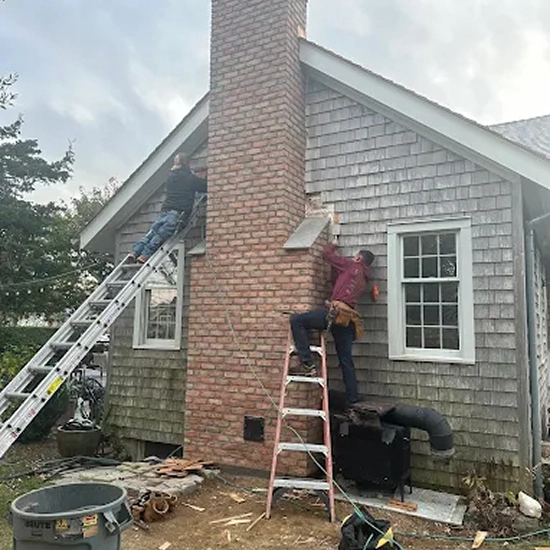
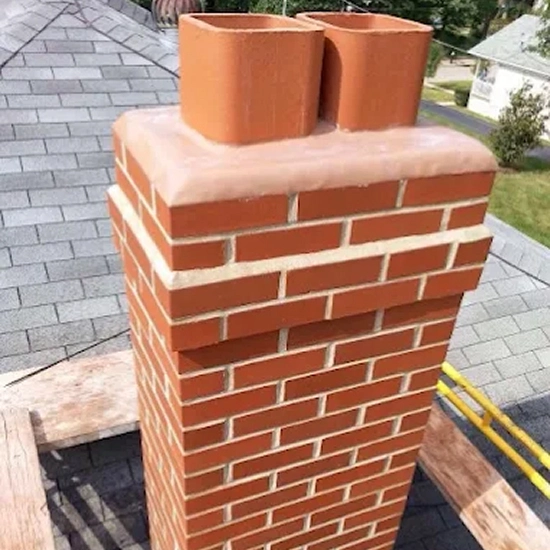
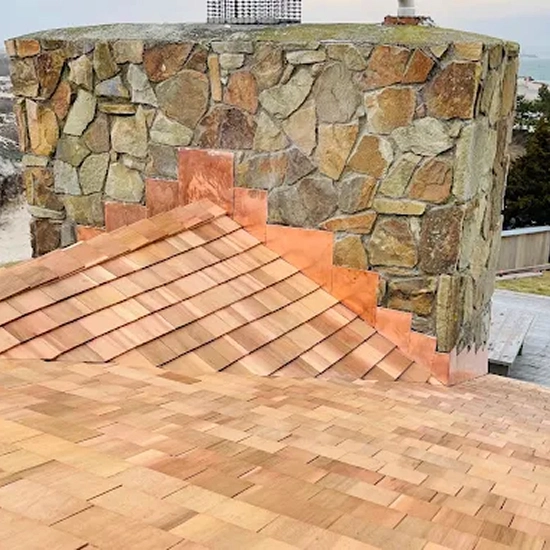
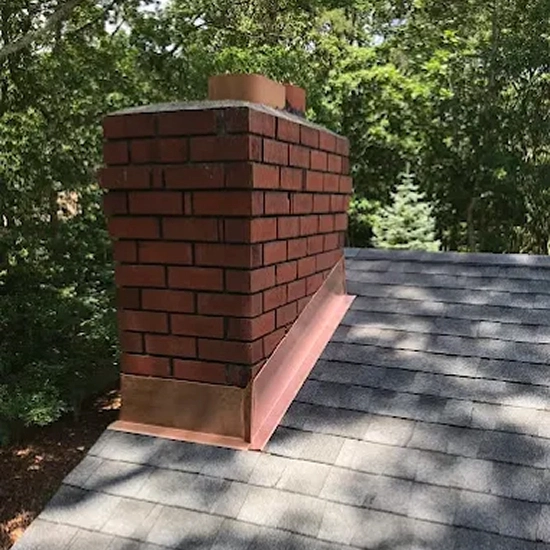
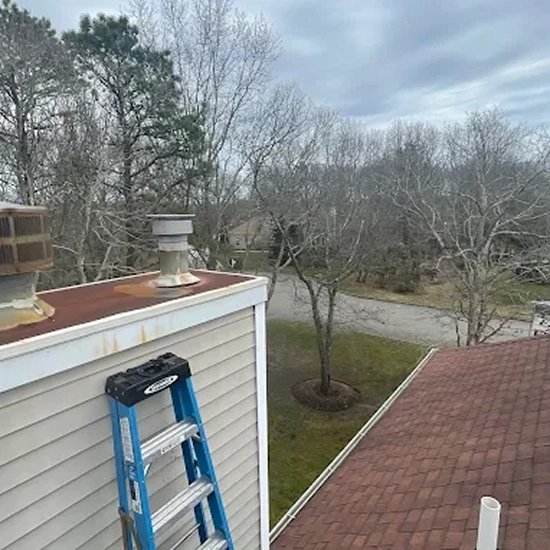
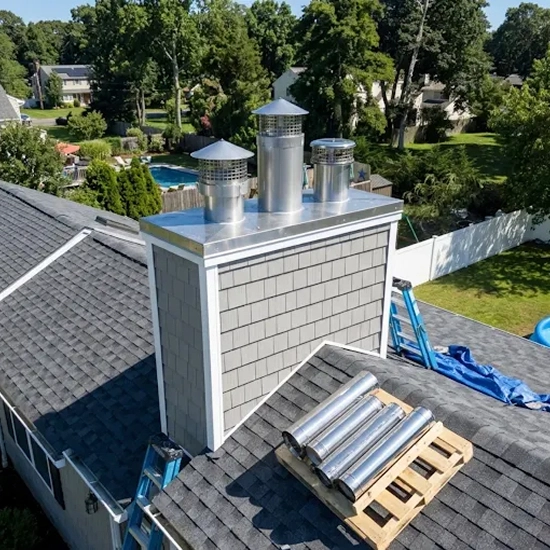
Cracked crowns, crumbling mortar, and leaks around the chimney. Here’s what we found and how it looks now.


/ FAQ’s
Straight answers, no pressure. Don’t see your question? Call us.
It’s usually one of three things: a cracked crown, failed flashing where the chimney meets the roof, or crumbling mortar joints. It isn’t normal for a chimney to leak, and it gets worse each season. We find the source first, then tell you what it needs.
It depends on what’s wrong, how tall the chimney is, and how hard it is to reach. Sealing a small crack costs far less than rebuilding a crown or relining a flue. We give free estimates and tell you what’s included before any work starts.
Sometimes a liner really is needed, and sometimes it isn’t. A liner is needed if the flue is cracked, damaged, or missing. Ask to be shown the problem on camera or in photos. A good contractor will show you, not just tell you. We’re happy to give a second opinion.
Creosote is the black, tar-like buildup left by wood fires. A thin sooty layer is normal and gets swept off. When it’s about 1/8 inch thick, or looks shiny and hardened like tar, it’s a fire risk and the chimney should be cleaned before the next fire.
Once a year, even if you rarely use the fireplace. Water, animals, and age damage chimneys that sit unused. Get it checked before the first fire of the season and after any big storm.
There’s no set date. It depends on the chimney’s age, the weather it takes, and how well it’s been maintained. Small repairs done early, like a new crown or repointing, often add years of life. If you see cracks, loose bricks, or water stains, don’t wait.
Chimney repair, Chimney inspection, Chimney maintenance, Chimney restoration, Chimney rebuilding, Chimney masonry repair, Chimney crown repair, Chimney cap installation, Chimney flashing repair, Chimney liner repair, Chimney brick repair, Chimney flue repair, Chimney leak repair, Chimney waterproofing, Chimney pointing, Chimney tuckpointing, Chimney sealing, Chimney sweep services, Chimney cleaning, Chimney relining, Chimney liner installation, Chimney draft problems, Smoke chamber repair, Firebox repair, Masonry chimney repair, Metal chimney repair, Prefabricated chimney repair, Historic chimney restoration, Chimney flashing replacement, Chimney crown rebuilding.